

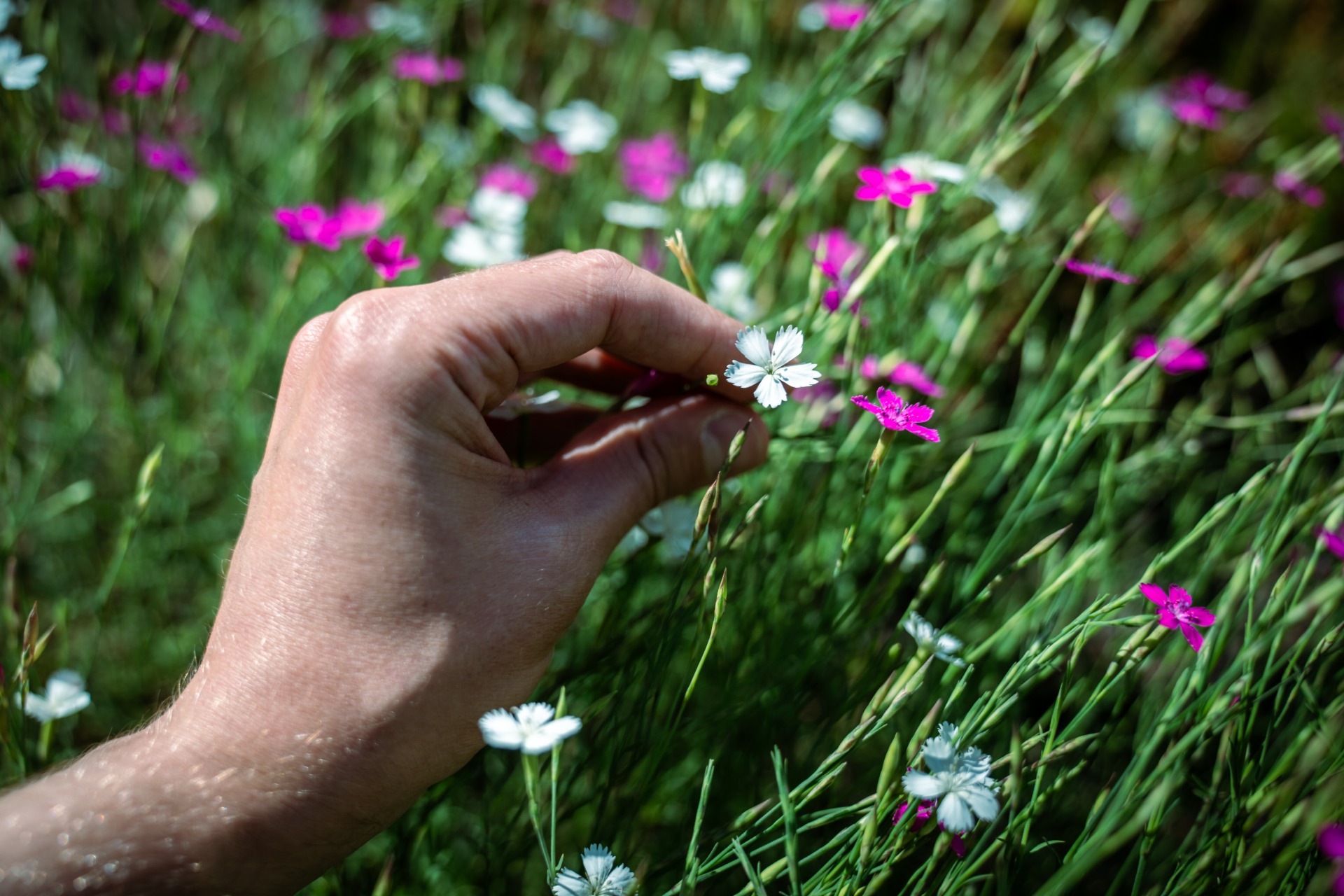
I spent years treating worry like a full-time job. Then one ordinary afternoon I decided to consider how the wildflowers grow, and the shift felt almost unfair in its simplicity.
I was sitting on a low stone wall at the edge of a field near my house. Bills sat unpaid on the kitchen table. My inbox blinked with three different “urgent” messages. My mind kept looping the same tired questions about money, timing, and whether I was falling behind. I had walked outside to clear my head. Instead I just stared at a scatter of small purple blooms that had pushed up through the gravel.
They looked completely unbothered.
That was the moment the old verse stopped sounding like Sunday-school wallpaper and started sounding like practical advice. I had heard it a hundred times. This time I actually looked.
Why I Finally Paid Attention to the Wildflowers
I used to skip right past the nature metaphors in Scripture. They felt soft. Decorative. Honestly? I wanted strategy, not poetry. I wanted lists and action steps. Wildflowers seemed too fragile for the kind of pressure I carried.
Then life got loud enough that my usual coping tools stopped working. Lists piled up. The more I tried to control every variable, the tighter the knot in my chest became. One day I opened Luke 12 again and read the line slowly: “Consider how the wild flowers grow. They do not labor or spin.”
I walked outside and did exactly that.
I watched a patch of black-eyed Susans and some late-blooming clover. No one had planted them. No one watered them on a schedule. They simply grew where the conditions allowed and stopped when the season changed. Their beauty did not require a five-year plan.
That observation hit harder than I expected.
What the Wildflowers Actually Do (and Don’t Do)
I started noticing patterns once I slowed down enough to watch.
Wildflowers do not invent their own weather. They respond to the rain that arrives and the sun that shows up. They put roots down in whatever soil they land in. Some years the bloom is spectacular. Some years it is thin. They keep going either way.
They also refuse to compete the way I do. A cluster of poppies does not compare itself to the taller lupine three feet away. It just opens when it is ready.
Here is what I observed over several seasons:
- They wait for the right conditions. Seeds can sit for months or even years. When moisture and temperature finally align, growth begins. No panic.
- They spend energy on the present moment. Most of their effort goes into leaves, stems, and flowers right now. They do not stockpile anxiety about next year’s drought.
- They accept a short season. Many last only weeks. That does not make them less valuable. It makes them focused.
- They attract what they need without chasing. Bees and butterflies show up because the flowers simply exist as they were designed.
I used to think this approach looked passive. Now I see it as efficient. Energy that never gets spent on worry stays available for actual living.
The Day I Stopped Spinning
I had a stretch of months where every decision felt heavy. Work projects stalled. A friendship cooled for reasons I could not fix. Sleep got shallow. I kept telling myself that if I just worked harder or planned better, the tension would ease.
It did not.
One Saturday I drove to a state park known for its spring wildflower display. I left my phone in the car on purpose. I walked the trail and forced myself to look at individual plants instead of the whole hillside. I noticed how a single stem of Indian paintbrush held its color even on a windy day. I watched a bee disappear into a blossom and come back out covered in pollen, completely unconcerned about my presence.
See, that is when the reframing landed.
I think I had been asking the wrong question. The question was never “How do I force a better outcome?” The better question became “What if I stopped laboring and spinning the same anxious thoughts and simply grew where I am?”
That sounds almost too simple. It is not.
I started experimenting. When a fresh wave of worry hit, I would step outside or even just look out the window and name three wildflowers I could remember seeing. Then I would ask myself whether those plants were currently panicking about next week’s weather. The answer was always no. The comparison did not erase the problem. It shrank it to a size I could actually hold.
Practical Ways I Started Living the Lesson
I did not become a different person overnight. I still check bank balances and reply to emails. But the internal noise dropped. Here are the concrete habits that stuck:
I built a short daily pause. Every morning I spend two minutes looking at whatever is growing outside my door. Sometimes it is a dandelion in the sidewalk crack. Sometimes it is the patch of native flowers I finally planted in the back corner. I do not journal about it. I just look.
I changed how I talk to myself about provision. When money feels tight, I used to spiral into “what if” stories. Now I interrupt the spiral with a blunt statement: the same God who clothes the temporary grass of the field has not forgotten me. It is not magic. It is a deliberate redirect of attention.
I stopped treating every delay as a personal failure. Wildflowers bloom on their own calendar. Some years the display is late because of a cold spring. The plants do not interpret that as rejection. I am learning the same posture.
I also started planting actual wildflowers. FYI, this part surprised me. I bought a small bag of native seed mix suited to my region and scattered it in a neglected strip of yard. The first year was mostly green. The second year brought color. Watching something grow without constant intervention rewired something in me. I stopped hovering. I started trusting the process more.
The Surprising Strength Hidden in Fragility
People sometimes talk about wildflowers as if they are delicate. In reality many of them are tough. They survive poor soil, sudden heat, and the occasional trampling. Their strength does not come from control. It comes from flexibility and deep roots.
I needed that reminder.
There was a season when a close family member faced a health scare. My instinct was to research every possible outcome and prepare for the worst. The mental spinning exhausted me faster than the actual situation. One afternoon I walked the same field again and noticed how the late-summer blooms leaned with the wind instead of fighting it. They bent. They did not break.
I decided to try the same approach. I still made the necessary phone calls and showed up for appointments. But I released the need to script every possible future. The difference in my body was immediate. Shoulders dropped. Sleep improved. I could stay present for the person who needed me instead of disappearing into my own fear.
That is the quiet power in the invitation to consider how the wildflowers grow. It does not remove hard things. It changes the way you carry them.
Common Pushback I Hear (and Felt Myself)
Some people push back hard on this idea. I did too at first.
“Doesn’t this sound like doing nothing?”
No. The flowers still grow. They still produce seed. They still participate fully in their design. The difference is the absence of frantic effort that adds nothing useful.
“What about real responsibility?”
I still pay bills and meet deadlines. The lesson is not about abandoning duty. It is about refusing to add a second layer of self-inflicted pressure on top of the actual work.
“Isn’t this just spiritualizing laziness?”
IMO, the opposite is true. Anxiety often masquerades as productivity. It keeps you busy while accomplishing very little of lasting value. The wildflower approach clears space for the work that actually matters.
I had to confront my own version of these objections. The process felt uncomfortable. Comfort was never the goal. Freedom was.
How This Shift Shows Up in Ordinary Days
These days I notice the difference most in small moments.
I used to wake up and immediately scan for problems. Now I often start by looking at the light on the leaves outside the kitchen window. The problems still exist. They just no longer own the first thirty minutes of my day.
I used to replay conversations and invent better replies. Now I catch myself and ask whether the wildflowers are currently rewriting yesterday’s weather. The absurdity of the question usually breaks the loop.
I used to measure my worth by how far ahead I stayed. Now I measure more by whether I am present and growing in the actual soil I have been given. Some seasons are rich. Some are sparse. Both count.
The change is not dramatic enough for a before-and-after photo. It is quieter than that. It feels like background noise finally turning down so the real conversation can be heard.
Frequently Asked Questions
What does it mean to consider how the wildflowers grow in everyday life?
It means deliberately observing the way they thrive without frantic effort and letting that observation interrupt your own anxious patterns. You notice their dependence, their timing, and their beauty, then ask what it would look like to live with the same trust.
Is this just about ignoring problems?
No. You still handle what needs handling. The difference is that you stop adding imaginary catastrophes on top of the real ones. The flowers deal with actual weather, not hypothetical storms.
How long does it take for this mindset to stick?
It varies. For me the first real shift came within a couple of weeks of consistent observation. The deeper rewiring took months of returning to the practice whenever worry tried to reclaim the driver’s seat.
Can I apply this if I live in a city with almost no wildflowers?
Yes. A single weed in a sidewalk crack works. A potted plant on a balcony works. Even a photo of a wildflower meadow on your phone can serve as a starting point. The principle travels.
Does considering how the wildflowers grow require a particular religious background?
The phrase comes from the words of Jesus, so it carries that context. The practical invitation to stop laboring and spinning in anxiety is available to anyone willing to try it. You do not need a theology degree to notice a flower and decide to worry less.
A Final Thought I Keep Returning To
I still have days when the old patterns try to take over. I still catch myself spinning. The difference is that I now have a reliable place to stand when that happens. I go look at something that grows without my permission or my panic. I remember that the same care that dresses a temporary bloom is available to me.
The wildflowers never promised to make life easy. They simply demonstrated a better way to inhabit it. They labor at nothing unnecessary. They spin no anxious stories. They open when the light arrives and close when the season turns.
I am learning to do the same.
If you have been carrying more worry than you can hold, try the experiment yourself. Step outside. Find one small flower that no one planted and no one manages. Watch it for a full minute. Then ask whether that plant is currently inventing problems that do not yet exist. Let the answer land. Then decide, just for today, to grow a little more like that.