

Believe me, there’s nothing quite like slicing into a home-grown banana under the Florida sun, feeling the thick skin give way and tasting that sweet, creamy flesh. When I first started gardening down here, I had my heart set on exotic flowers and rare citrus—but I kept getting drawn back to the big, tropical leaves and lush vibe of banana plants. That’s what led me to ask: “Can I grow a banana tree in Florida, and make it thrive?”
Preferences vary—maybe you’re after elegant landscape palms, or fragrant flowers, or top-yielding fruit trees. Me? I wanted both the lush look and the fruit. In my little backyard patch (yes, I’m still a hobbyist), I tried several banana varieties, played with sun angles, wind buffering, soil tweaks… and learned a few things the hard way.
In this guide I’m sharing what I discovered: practical, reliable tips to help you successfully grow a banana tree in Florida (and yes, get bananas someday!). Whether you’re in south Florida or edging into the northern fringes, I’ll walk you through how to pick the right variety, set it up for success, care for it through heat/rain/frost, and harvest your reward.
So stick with me—I’ll share both the big ideas and the nitty-gritty. If you’re ready to bring a little tropical magic into your yard (with bananas hanging down, leaves shimmering in the breeze), let’s dive in.
Major Banana Varieties for Florida & Key Features
Here’s a comparison table summarizing the major banana tree options I’ve found useful in Florida, along with their best region or use, size/height, season/timing and standout features. Use this as a quick reference before we dig deeper.
| Name (Variety) | Best Region / Use | Mature Height / Performance | Fruit Season / Time to Fruit | Feature / Special Trait |
|---|---|---|---|---|
| Dwarf Cavendish | All around Florida, home eating | ~8-10 ft under good care | ~9-15 months from planting to fruit | Familiar dessert banana, manageable size |
| Goldfinger (or cold-hardy type) | Slightly cooler zones (northern FL) | ~10-12 ft | ~10-18 months depending on warmth | Better cold tolerance |
| Ice Cream (Blue Java) | South Florida gourmet flavor | ~12-15 ft | ~10-14 months | Sweet vanilla-ice-cream taste |
| Plantain / cooking banana | For cooking / tropical look | ~10-12 ft | ~9-16 months | Good for baking/cooking instead of fresh |
| Ornamental banana (Musa basjoo etc) | Landscape accent, maybe non-fruit | ~6-8 ft or more | Usually none edible or minimal fruit | Big leaves, dramatic look |
1. Dwarf Cavendish

6
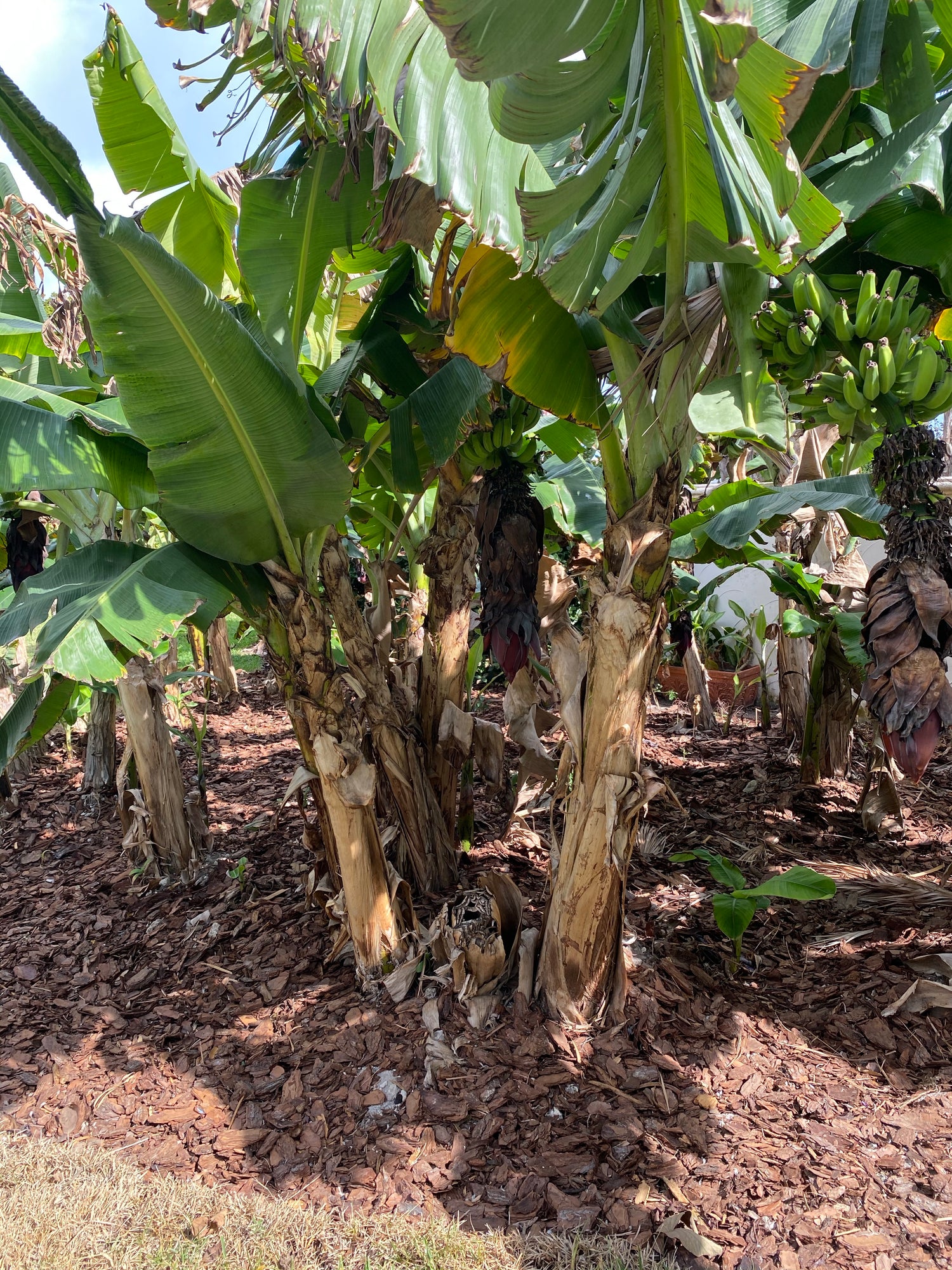
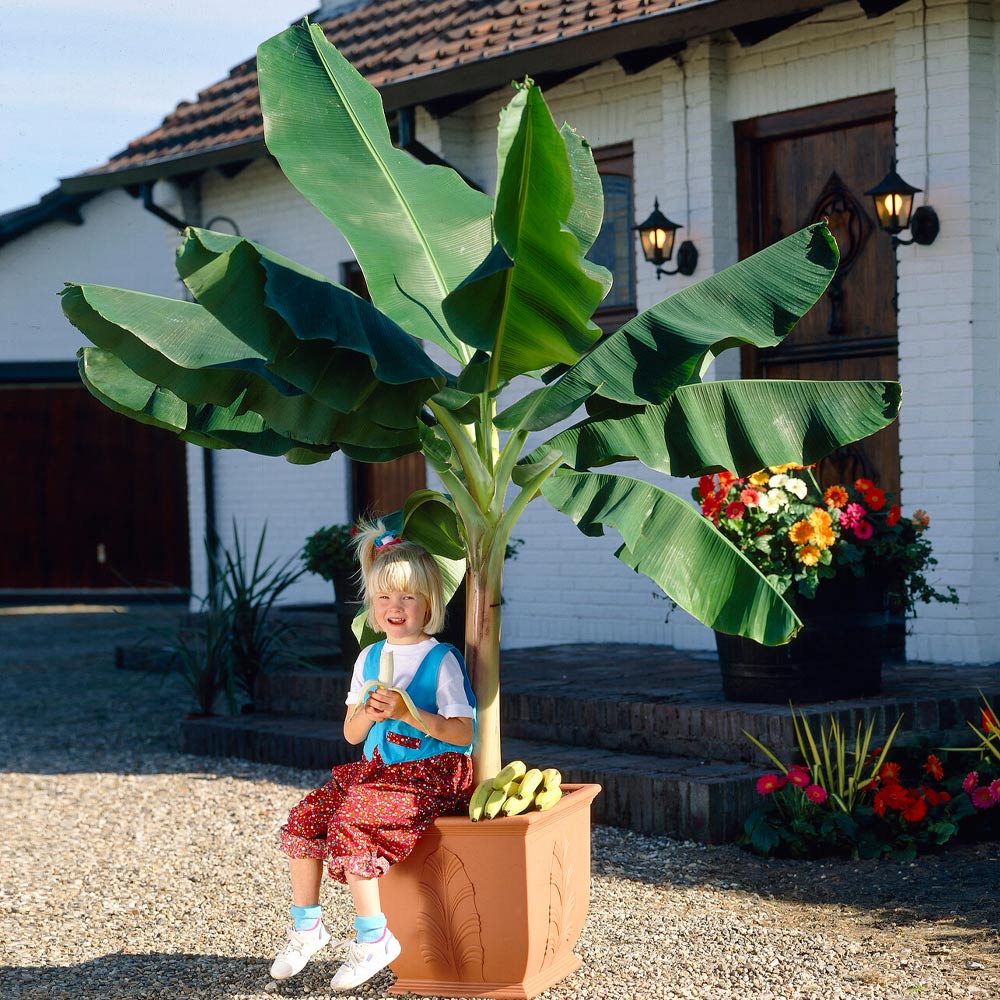
In my garden I planted a Dwarf Cavendish early on, because I wanted something “safe” and well-known. Honestly, it felt like a first step into banana growing—and it delivered. The leaves go big, glossy green, and you get that tropical feel.
What I like about it:
- It performs well across most of Florida, from central to south. Gardening Solutions+1
- Manageable height (in my experience ~8-10 ft after the first year) so it doesn’t dominate the yard.
- Decent fruit flavor: familiar banana taste, so you’re not experimenting with something wildly different.
Practical tip:
- Give it full sun (at least 6–8 hours) and protect it from wind. In my yard, I planted it near the south-facing wall so the afternoon sun hits it and a hedge blocks strong breezes.
- Amend your typical Florida sandy soil with plenty of compost and manure. As a reference, one guide for Florida bananas recommends a pH 5.5–7.0 and well-drained soil. Ask IFAS – Powered by EDIS
- Because it’s a “dwarf” type, you can still plant shrubs around it or shift plants underneath rather than feeling like it’s overwhelming the space.
Growing and caring insights:
- The rhizome (underground “root” base) will send up new stalks (pups). I kept one main trunk to fruit, one to replace it next season, and removed extra suckers to keep the group manageable and productive.
- Fertilize regularly: bananas are heavy feeders in Florida. One source says you may need 4-6 fertilizations/year. Gardening Solutions
- Watch for cold snaps: while this variety is fairly tolerant, if a freeze hits your region you’ll want to cover or mulch the pseudostem.
Cross-reference: If you want to explore more advanced care, you might enjoy this article on how to grow bananas in Florida home gardens; it goes deeper into spacing and drainage.
2. Goldfinger (Cold-Hardy/Heavy Yield)


6
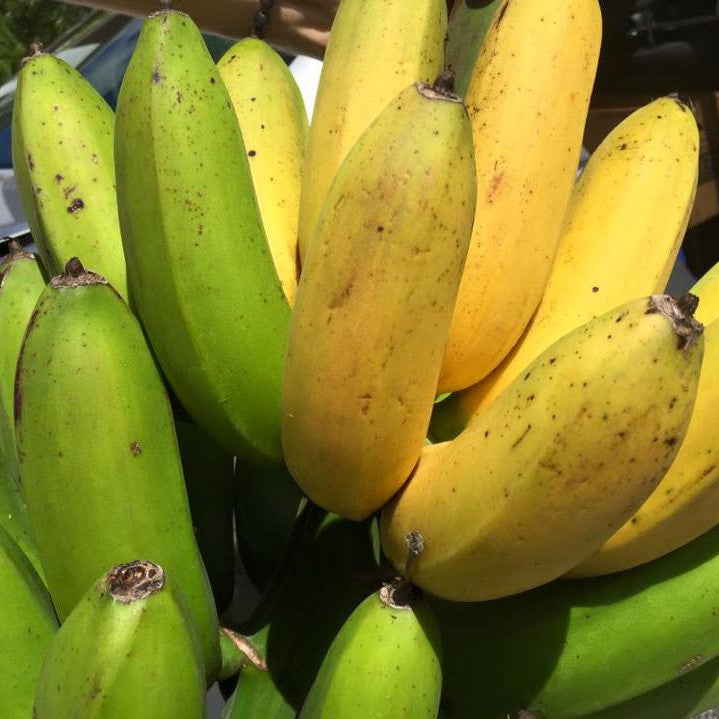
Since I’m in a part of Florida that sometimes dips into borderline cooler nights, I decided to try a more cold-hardy variety (Goldfinger or something similar) to see if I could extend the growing zone upward.
My observation:
- The plant held up better during an unexpected chilly spell than my first banana. Leaves browned but new growth came back quickly.
- Height climbed to about 10-12 ft in Year 1.
- Yield seemed good, though flavor was slightly different from the sweet Cavendish I was used to—still excellent.
Why it might be right for you:
- If you’re planting in central or northern Florida (where freezes or cold nights occasionally happen), this variety gives you more margin for error.
- If you want bigger bunches and don’t mind slightly more size to manage.
Practical tip:
- Space the plants 8–10 ft apart minimum, especially since they’ll get broad leaves and big footprint. One Florida guide says 8-10 ft spacing helps airflow and prevents pest/disease build-up. Everglades Farm+1
- Mulch deeply around the base (3-4 inches) after planting to retain moisture and moderate soil temperature.
- Remove dead leaves and stalks after fruiting to keep the area tidy and reduce pest habitat.
Care note:
- These varieties still dislike standing water—one Florida extension says banana plants are “not flood tolerant” and need good drainage. Ask IFAS – Powered by EDIS
- Wind can shred leaves rapidly. I had a breezy afternoon storm that shredded some leaves; I trimmed and cleaned up promptly.
3. Ice Cream (Blue Java)


6
This one I planted mostly for fun. Yes, regular bananas are great—but I wanted something a little extra exotic. The variety known as Ice Cream or Blue Java has that nickname for a reason: the fruit is said to have a sweet, vanilla-ice-cream-type flavor.
What happened in my yard:
- The plant was a bit taller (12-15 ft) and took slightly longer to fruit (closer to the upper side of 10–14 months).
- The leaves were broad, dramatic, and the fruit clusters got a lot of attention from neighbors.
- Flavor lived up to expectation—if you’re patient, you’ll feel rewarded.
Things to be careful about:
- Because of the size, you’ll want a strong wind-break or sheltered spot. I planted ours against a fence line with a tall shrub wind buffer.
- Feeding is more critical: because the leaf area was bigger I had to up the compost and mulch. One horticultural site says bananas in Florida may need 1 to 1.5 inches of water weekly when rainfall is low. Gardening Solutions+1
- Harvest timing: I clipped the bunch once the skins were green-yellow and the fruit well-filled. Waiting too long increased risk of rot or pests.
Practical tip:
- Clip off the flower stalk (inflorescence) just after fruit formation to direct energy into the fruit. I did this and noticed fuller fingers on the banana cluster.
- Plant in rich soil: at the planting time I dug a hole ~2 ft deep, amended with compost, manure, and a little greensand/kelp. One guide recommends digging deep (~2 ft) and wide (~3 ft) for Florida banana plants. Beautiful Boundaries
- Monitor for nematodes or other root pests: because the plant invests so much in fruit, root health is critical. I planted marigolds around as a companion.
4. Plantain / Cooking Banana Type

6
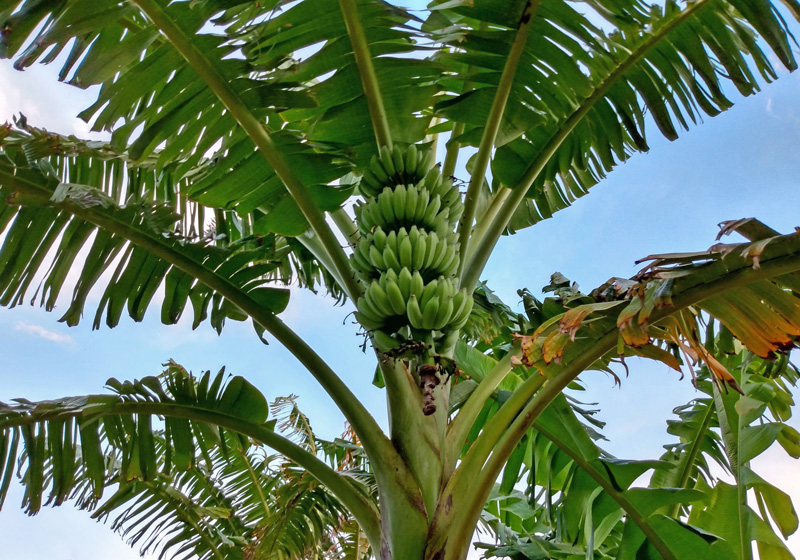
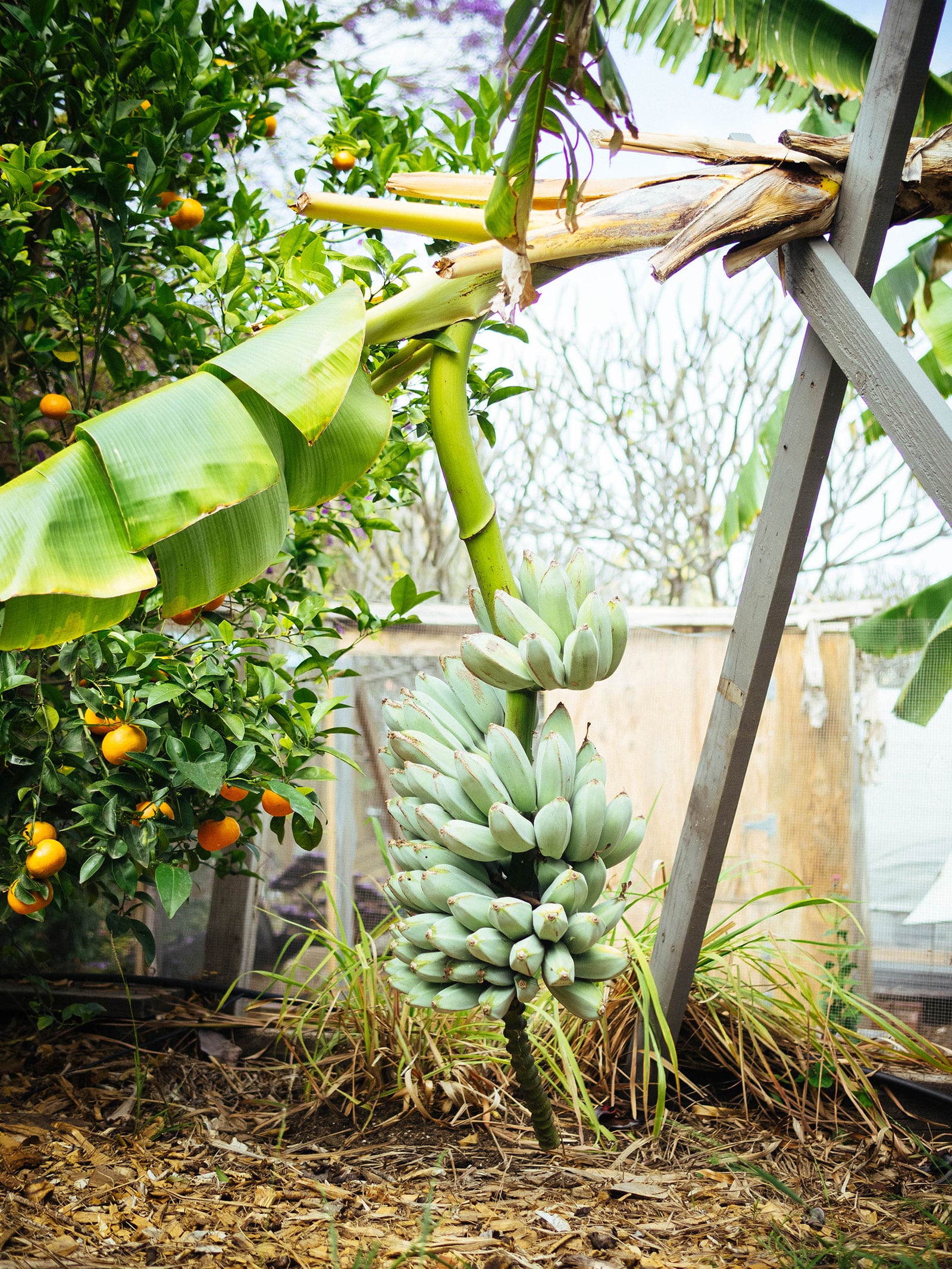
If you’re not just after bananas for fresh fruit but want something you can cook/bake (think plantains or dessert-versatile bananas), this type might appeal. I planted a plantain type in a shaded section of my yard (part sun) to see how it would hold up—and it did pretty well.
What I found:
- Slightly slower to fruit compared to dessert banana types, but when fruit came it was robust and versatile.
- Good fallback if one of your usual bananas struggled in a marginal spot.
- It gave a different texture/flavor profile, which is fun if you like to experiment in the kitchen.
Tips for success:
- Plant in full sun if possible—while some shade will suffice, full sun gives better growth and fruiting. Florida extension notes bananas delay if shaded too much. Ask IFAS – Powered by EDIS
- Because the fruit may be larger/heavier, ensure the plant is well-supported and stakes or wind-protection are in place.
- Harvest before full yellow if you intend to cook—the starch content is higher and flavor better when slightly green.
Care reminder:
- Same basic care as dessert bananas: rich soil, mulch, consistent moisture, protect from cold/wind.
- If you notice leaf yellowing or poor fruit fill, check soil fertility and moisture; many plantains in Florida underperform because of nutrient or water stress, according to gardener forums. Reddit
5. Ornamental Banana (For Tropical Look ± Fruit)


6
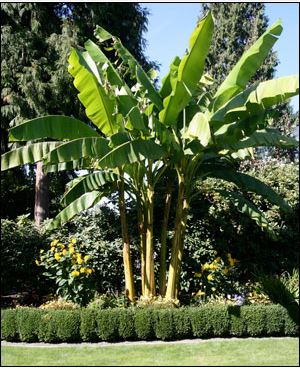
To be fair, sometimes I just wanted the “look” more than the fruit. I planted an ornamental banana variety (e.g., a cold-hardy one that may or may not yield good edible fruit) near my patio to enhance the tropical vibe. If you’re landscaping and fruit is a bonus rather than a goal, this is for you.
Why it works:
- Big broad leaves give lush tropical feel. One horticultural resource says bananas are great for that: “they can be grown in nearly all areas of the state…” Gardening Solutions
- Lower maintenance if you’re not pushing for heavy yields.
- If you do get fruit, happy bonus.
Key pointers:
- Choose a protected site, especially if your variety is less fruit-focused and more cold-tolerant.
- Even ornamental types need good soil and drainage—if the soil is poorly drained, you’ll get stunting. (Florida extension warns bananas are not flood tolerant.) Ask IFAS – Powered by EDIS
- Let it mature as a backdrop plant—don’t expect it to rush to fruit. Instead enjoy the foliage and texture.
Helpful Notes / Expert Advice Section
Here’s a roundup of additional advice based on climate, regional caution, seasonal tip-offs and safety (yes, banana trees have their tricks!). These are things I’ve learned the personal way—and you’ll thank yourself later if you heed them.
• Climate & Temperature
- Ideal shoot growth for bananas is between ~78–82 °F (26–28 °C), and fruit growth peaks ~84–86 °F (29–30 °C). Ask IFAS – Powered by EDIS
- Growth slows below ~60 °F (16 °C), and can essentially stop near ~50 °F (10 °C). Ask IFAS – Powered by EDIS
- Freeze or near-freeze conditions (32 °F/0 °C and below) are dangerous; pseudostems (the “trunk”) can be killed. One gardener reported damage in cooler north-Florida zones. Reddit
- Wind is a real threat: strong winds shred banana leaves and can topple tall plants. Florida extension notes this. Ask IFAS – Powered by EDIS
- If you’re in north Florida or a colder micro-climate, planting near a south-facing wall, or using frost cloth, wind break, or mulch insulation can make a big difference.
• Soil, Drainage & Site Selection
- Choose well-drained, deep soil high in organic matter; pH ~5.5–7.0 is ideal. Ask IFAS – Powered by EDIS
- Avoid low spots or areas prone to standing water—the roots will suffer and fruit yield drops.
- In Florida’s sandy soils, it helps to build a raised bed or mound so water doesn’t accumulate.
- Space plants appropriately (8-10 ft minimum in many cases) to allow leaves to spread and air to circulate. Crowding leads to disease/pest problems. Everglades Farm+1
• Watering & Fertilizing
- Bananas in Florida are heavy drinkers and feeders. One guide says 1 to 1.5 inches of water weekly (when rain is absent) is a good benchmark. Gardening Solutions
- Mulch helps retain moisture and moderates soil temperature—especially useful in hot summer or borderline cold winter.
- Fertilize regularly: bananas don’t store many nutrients, so they rely on consistent feeding. Without it, leaves languish, fruit is small. Tropical Tree Guide
- Soil testing is a good investment—especially in Florida’s tricky soils. One gardener noted nutrient imbalances can cause odd deficiencies in banana plants. Tropical Tree Guide
• Pests, Disease & Maintenance
- Monitor for nematodes, fungal diseases (such as Sigatoka) and bananas borers. Many Florida guides mention these pests. Beautiful Boundaries+1
- Clean up dead leaves and stalks: depriving pests of hiding spots helps.
- Thin suckers/pups so you maintain 2-3 stems maximum per clump: one fruiting, one replacing, one young. This improves yield and health. Gardening Solutions
• Harvesting & Timing
- After flowering (appearance of the “banana bell” inflorescence) expect about 80–180 days depending on variety & temperature. Ask IFAS – Powered by EDIS
- In Florida, warm temperature accelerates ripening; cooler nights slow it. You’ll want to watch the fruit filling out, color change, and sky-ward pointing fingers.
- Harvest before full yellow if you want to ripen indoors; if you wait too long on the stalk you risk pests or splitting.
• Seasonal & Regional Considerations
- In southern Florida (Zones 10-11) banana growing is more “straightforward” year-round thanks to warm winters.
- In central or northern Florida (Zones 8-9), you’ll want to pick the more cold-tolerant varieties, use wind/freeze protection, or treat the banana as seasonal (cut back after frost, let rhizome survive underground).
- After a freeze event, prune back damaged pseudostems and expect new shoots from the rhizome when warmth returns. Florida extension notes this. Ask IFAS – Powered by EDIS
• Safety / Landscape Notes
- Because banana leaves grow large, keep them away from walkways or doorways if they get shredded by wind (they can mess with aesthetics/cleanup).
- If you plant near a wall, leave clearance for leaves and air flow so moisture doesn’t build up and lead to fungal issues.
- Big banana plants can cast heavy shadows: plan your landscaping accordingly, especially if you have neighboring plants that need sun.
Conclusion
Thank you for sticking with me through this banana-growing journey. I’ve grown and learned quite a bit over these seasons—some wins, some lessons learned—but I’m still excited every time I see that banana bunch forming and I know I’ll get home-grown fruit soon.
If you’re thinking of starting your own banana tree in Florida—whether it’s a trusty Dwarf Cavendish, a cold-hardy Goldfinger, a fun Ice Cream banana, a cooking plantain, or an ornamental tropical look-alike—I hope this guide brings you confidence. Plant the right variety for your region, give it the sun, water, soil and care it needs, protect it from heat, wind and cold, and you’ll be rewarded.
Honestly, nothing beats walking out in your yard, clipping your own banana bunch and slicing into it with joy. If you’d like bonus resources—like how to deal with specific pests, or how to plan a banana circle in Florida—I’d love to share those too. Subscribe, check in with the blog, or drop a comment below: let’s talk banana trees!
My passion for gardening (and for bananas) keeps growing, and I’m glad you’re here. Here’s to lush leaves, sweet fruit, and a thriving Florida backyard. Happy growing—and may your banana trees prosper!