

I spent three seasons watching my pepper plants sulk and produce almost nothing. Honestly? The frustration nearly made me quit. Then I locked in a simple system for how to grow peppers that actually fills a basket. This is the full walk-through I wish someone had handed me years ago. No fluff. Just what works in a real backyard.
Choosing the Right Pepper Varieties for Your Setup
I used to grab whatever looked pretty at the nursery. Big mistake. Peppers demand heat and time. Pick the wrong one and you wait forever for fruit that never shows.
I now stick to varieties that match my short-to-medium season. Bell peppers like California Wonder give me classic sweet blocks in about 75 days from transplant. Jalapeños and Anaheims deliver reliable heat and heavy yields even when nights stay cool. For snacking I go with Shishito or sweet banana types. They ripen fast and keep producing.
See, the key is days to maturity. Anything over 90 days from transplant risks frost in my zone. I check the seed packet or tag every time. Short-season hybrids beat long-season heirlooms for me almost every year. IMO the early producers win when summer is unpredictable.
If you garden in a cool climate, skip the giant stuffing bells at first. Start with smaller fruit. They set earlier and handle cooler nights better.
How to Grow Peppers From Seed Indoors
This is where most of my early failures started. Peppers hate cold soil and weak light. Get the indoor stage right and the rest becomes easier.
Timing and Supplies
I start seeds 8 to 10 weeks before my last frost date. For me that means mid-February. I use a sterile seed-starting mix. No garden soil. It stays too dense and invites damping off.
I fill cell trays, plant two seeds per cell a quarter-inch deep, and water from the bottom. Then I set the tray on a heat mat. Soil temperature needs to sit between 75 and 85 degrees Fahrenheit. Below 70 and germination crawls or stalls. I cover with a clear dome for the first week to hold humidity.
Germination Tricks
Once the first sprouts appear I pull the dome and move the tray under bright lights. I keep the lights just a few inches above the plants for 14 to 16 hours a day. Without strong overhead light the seedlings stretch and flop. I learned that the hard way.
When the first true leaves show I thin to the strongest seedling. I pot them up into 3- or 4-inch pots once roots fill the cells. At this stage I start a weak liquid fertilizer every other watering. Nothing fancy. Just enough to keep leaves deep green.
If the plants try to flower indoors I pinch the buds off. I want roots and leaves first. Flowers can wait until they hit the ground.
Transplanting Peppers Outdoors Without Shock
I used to rush this step. Plants went from cozy indoor life straight into cold nights and wind. They sat there looking shocked for weeks.
Now I harden them off for a full 10 to 14 days. I start with an hour outside in shade and build up to full days. Nights below 55 degrees Fahrenheit still mean they come back inside.
I wait until nighttime lows stay above 50 to 55 degrees and the soil has warmed to at least 65 degrees. Black plastic mulch helps raise soil temperature faster. I lay it down a week or two ahead.
On transplant day I water the pots thoroughly first. I dig holes the same depth as the root ball. Peppers do not like deep planting the way tomatoes do. I set them at the same level they grew in the pot. Spacing runs 18 inches apart in rows 30 to 36 inches wide. Closer works if nights stay cool, but then I feed more often.
I plant on a cloudy afternoon when possible. Then I water them in well and add a light layer of mulch right away.
Soil, Sun, and Spacing That Deliver Results
Peppers need full sun. Six to eight hours minimum. I give them the brightest south-facing spot I have. Afternoon shade in extreme heat prevents sunscald on the fruit, but full sun is still the goal.
Soil pH should sit between 6.0 and 6.8. I test every couple of years. Too acidic and I add lime the fall before. I work in plenty of compost before planting. Good drainage matters more than richness. Soggy roots kill more plants than poor soil ever will.
I rotate crops. No peppers, tomatoes, potatoes, or eggplants in the same bed for three or four years. That cuts disease pressure hard.
In containers I use at least 3- to 5-gallon pots with quality potting mix. They dry out faster so I watch water more carefully. Containers also warm up quicker in spring, which helps in cooler zones.
Watering and Feeding My Pepper Plants
Inconsistent water causes more problems than almost anything else. Blossom-end rot shows up as dark leathery patches on the bottom of the fruit. It is almost always a moisture swing, not a pure calcium shortage.
I aim for 1 to 2 inches of water per week. I water deeply at the base and let the top inch dry slightly between sessions. Drip irrigation or a soaker hose keeps leaves dry and disease lower. Mulch holds moisture and keeps soil temperature steady.
Fertilizer is where I got it wrong for years. Too much nitrogen and I grew beautiful leafy bushes with almost no fruit. Now I use a balanced or slightly higher-potassium feed once plants start flowering. I side-dress every four to six weeks. Fish emulsion or a light organic vegetable fertilizer works fine. I keep it light. Peppers are not heavy feeders once established.
FYI: if leaves stay pale I give a quick boost, but I never force growth with heavy nitrogen late in the season.
Dealing with Common Pepper Problems
Aphids show up first most years. I hose them off early or use insecticidal soap. Ladybugs and lacewings usually finish the job if I leave some alone.
Cutworms chew stems at the soil line on new transplants. I slip cardboard collars around the stems for the first few weeks. Simple and effective.
Bacterial spot and mosaic virus are the big disease threats. I avoid overhead watering, space plants for airflow, and pull any infected plants immediately. There is no cure once virus hits.
Flower drop happens when nights stay below 55 or days climb over 90. Consistent water and a bit of shade cloth in heat waves help. I also pinch the very first flower clusters after transplant. That forces the plant to build stronger roots and foliage first. Yields climb later.
Sunscald looks like pale leathery patches on fruit. More leaf cover prevents it. I plant a little denser for large-fruited types so the canopy shades the peppers.
Harvesting and Storing Your Peppers
I start picking when the fruit reaches full size and feels firm, even if still green. Leaving them on the plant longer deepens color and sweetness, but continuous harvest keeps the plant producing.
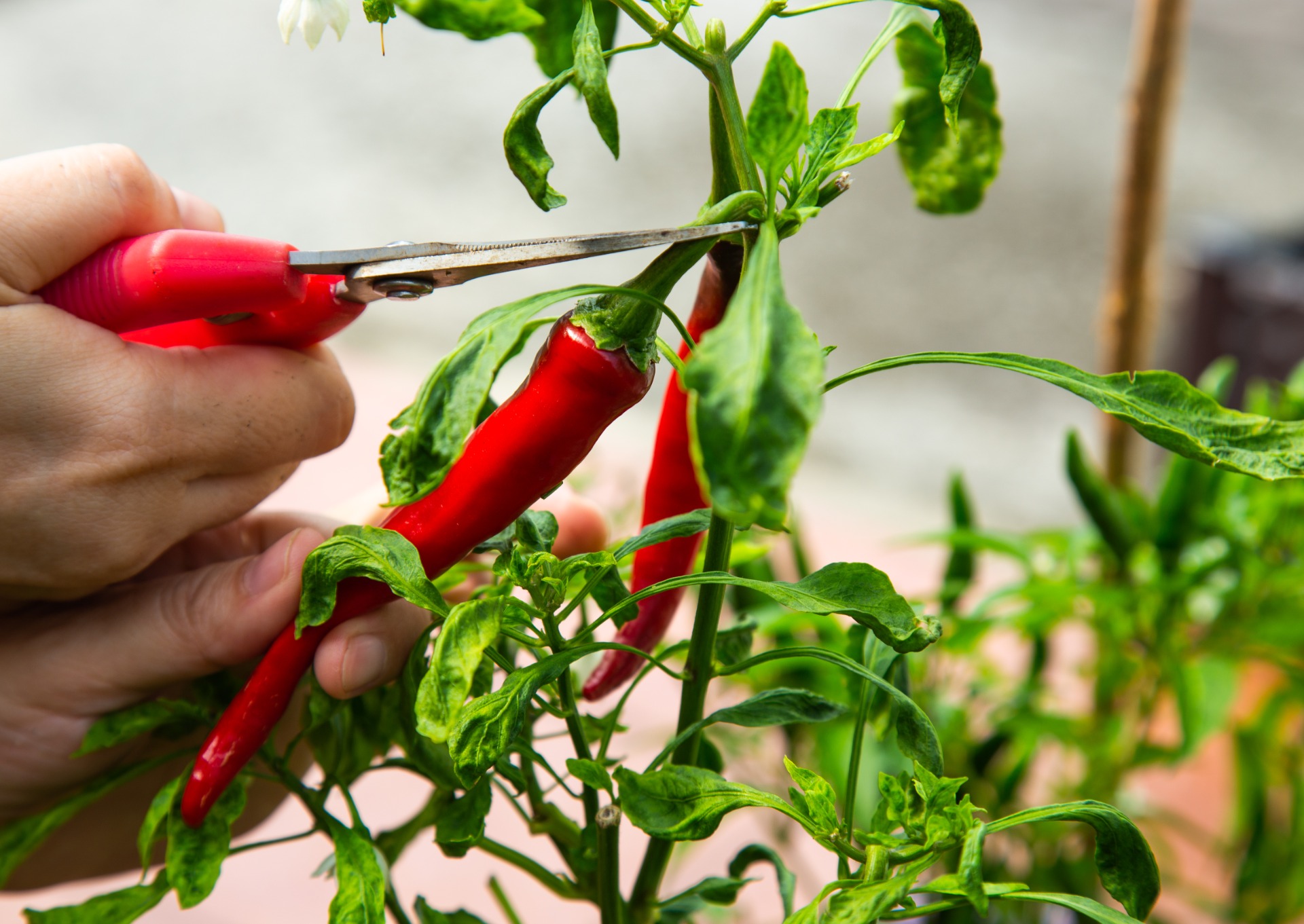
I use clean shears and leave a short stem. Pulling by hand can break branches. For hot varieties I wear gloves. Capsaicin stays on skin for hours.
Fresh peppers keep in the fridge for about a week. I freeze chopped ones on a tray first, then bag them. Dried peppers store for months in jars. I hang strings of cayenne and jalapeño in a warm dry spot until they rattle.
One plant can easily give me 15 to 25 peppers over a season when everything lines up. That number still surprises me after the early years of near-zero harvests.
Frequently Asked Questions
How long does it take to grow peppers from seed to harvest?
Most sweet peppers need 60 to 90 days after transplant. Hotter types can take longer. Start seeds 8 to 10 weeks before your last frost and you will hit the window.
Can I grow peppers in pots if I have no garden space?
Yes. Use 3- to 5-gallon containers with good drainage and full sun. Water more often than in-ground plants because pots dry faster.
Why do my pepper plants flower but never set fruit?
Temperature swings are the usual culprit. Nights below 55 or days over 90 drop blossoms. Keep soil moisture steady and wait for more moderate weather.
Do I need to prune pepper plants?
Light tip-pinching when plants reach 8 to 12 inches encourages bushier growth. I remove the first flower buds after transplant to build stronger plants. Heavy pruning is not necessary.
What is the biggest mistake beginners make when learning how to grow peppers?
Planting too early into cold soil. Peppers stall hard below 60 degrees at night. Wait for warm soil and you skip weeks of frustration.
I still check my plants every morning like a nervous parent. Some seasons the weather fights me. Most years the basket fills anyway. Start the seeds on time. Keep the soil warm and the water steady. Pick the right varieties. That combination turned my empty plants into reliable producers. Now go get your trays ready. The heat is coming.