

Hey there—if you’re reading this, you probably have a gorgeous Plumeria (frangipani) in your garden or on your patio. I know exactly how it feels: you pick that perfect spot for your tree, you envision the lush green leaves and fragrant blooms, and then…bam—you spot tiny white cotton-like spots and suddenly the dream feels threatened. Believe me, I’ve been there.
Just like gardeners differ in their preferences for bloom colour vs fragrance, sun-tolerant vs shade tolerant, or ease of care vs dramatic effect, each plumeria grower has their own approach. My preference? Big, fragrant flowers and low fuss. But that doesn’t mean I’m immune to pests. The very thing that draws me to plumiers—its tropical lushness—also draws the unwanted guest: the dreaded Mealybug.
My reasons for writing this article: over the years of growing plumeria in Bangladesh (humid coastal Chattogram region), I’ve found mealybugs creeping in multiple times. Every time it stressed me out, and each time I learned something new. I want to save you that stress by sharing what worked (and what didn’t) for me.
In this guide you’ll get clear, practical advice: what mealybugs look like on plumeria, how they behave, my tested methods for prevention and treatment, plus the regional notes for a tropical/sub-tropical garden like ours. By the end you’ll feel confident spotting and tackling mealybugs on your plumeria tree.


Quick Comparison Table: Mealybugs on Plumeria – Features & Control Options
Here’s a handy table summarising the major features of mealybug infestation on plumeria and the control options I’ve used:
| Feature / Option | Best Region / Use | Appearance / Performance | Time / Season of Concern | Key Notes / Feature |
|---|---|---|---|---|
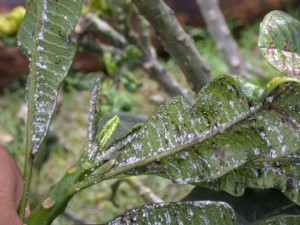
| Mealybug infestation (early stage) | Tropics & subtropics (warm, humid) | White waxy cotton-like patches on stems/leaves | Anytime plant is growing actively | Look under leaves & in leaf axils |
| Manual removal (cotton-swab alcohol) | For small potted plumeria or light pest | Instant kill of visible bugs, time-intensive | As soon as you spot white patches | Needs close inspection |
| Neem oil / horticultural oil spray | Outdoor trees or larger pots | Smothers/prefers safe insect control | Growing season, warm weather | Good for moderate infestations |
| Improve air circulation + water flush | Preventive & supportive for health | Reduces humid still air where bugs love to hide | Particularly rainy/humid times | Helps overall plumeria vigour |
| Chemical systemic insecticide | Severe infestations | Longer lasting control but needs caution | When other methods fail | Only as a last resort |
What Are Mealybugs on Plumeria?
In my first encounter, I thought the white fuzz on my plumeria was some kind of harmless fungus—until I took a closer look and saw little soft bodies underneath. The culprit: mealybugs—those sap-sucking insects with a waxy coating that look like little bits of cotton. They’re part of a broader insect family but on plumeria they can cause real trouble. Plumeria Today+2Gardening Know How+2
Here are some things I’ve learned:
- They gather in hidden crevices like leaf axils, buds, branch unions and the undersides of leaves. paliplumies.com+2plumeria.care+2
- They suck sap from the plant, weakening it—leading to distorted leaves, yellowing, stunted growth, maybe even leaf drop. Plumeria Today+1
- They produce sticky “honeydew” which can encourage black sooty mould on leaves, making things worse. Plumeria Today+1
So although plumerias are often robust tropical plants, I’ve found they are not immune to mealybugs—especially when the growing conditions are warm and humid, exactly like here in Bangladesh.
My Step-by-Step Guide: Identifying and Treating Mealybugs on Plumeria
1. Getting to know the signs
In my experience, the earliest sign is usually an area in the canopy where a dozen white fuzzy spots seem to gather around a bud or leaf join. I inspect regularly because once they spread it becomes much harder. Here are what I typically check:
- Leaf undersides, petiole and stem junctions.
- Buds and new growth (because the softer tissue is easier prey).
- A sticky residue underneath the leaf or on the pot/ground around the tree (honeydew).
- Leaves that begin to curl, fade, or drop off seemingly for no reason. Garden Vive+1
2. Manual removal: My first defence
When I catch them early (which I prefer), I go manual: small cotton swab dipped in rubbing alcohol, then I wipe every visible cluster. It’s time-consuming but very effective for small trees or potted plumeria. According to experts: “rub each bump or fluffy patch with alcohol and test first”. Plumeria Today+1
Tip from me: After wiping, rinse the area with clean water because the honeydew residue stays and can attract ants (and ants help spread the pests). I’ve found rinsing after alcohol treatment helps reduce recurrence.
3. Use of neem oil or horticultural oil
When the infestation is more than a few spots, I move to the next level: spraying with neem oil or a horticultural oil/soap mix. As the research says: because mealybugs are protected by waxy coating, simple soap may not always penetrate—oil helps. Plumeria Today+2plumeria.care+2
My method:
- Early morning or late afternoon (to avoid scorching the leaves).
- Mix per label/recipe (often 1-2 tablespoons of neem oil per litre plus a teaspoon of mild dish soap).
- Spray thoroughly top & bottom of leaves, stems, and the base zone.
- Repeat every 7-10 days until I don’t see any more white patches for two cycles.
4. Improving cultural/structural conditions
I’ve found that the healthiest plumeria are the ones that stay ahead of pests simply because they are not stressed. So I also focus on:
- Ensuring good drainage & avoiding water-logging (plumerias don’t like soggy roots).
- Providing full sun (or at least 6 hours) because better light means stronger plant.
- Pruning thin or crowded branches to improve airflow (mealybugs prefer stagnant, humid conditions). This advice matches what experts say about pest susceptibility in warm humid zones. Epic Gardening+1
- Regularly checking neighbouring plants. Because I learned the hard way: mealybugs can move between plants (especially aided by ants). One article pointed out: spray surrounding ground and nearby plants because the pest spreads. Garden Vive+1
5. Severe infestations: When things get serious
If a large part of the canopy or many buds are attacked and manual removal & neem oil haven’t contained the spread, I consider more serious measures. Some sources suggest systemic insecticides or dusting products under guidance. paliplumies.com+1 But to be honest, in my hobbyist garden I avoid harsh chemicals unless absolutely necessary—and I always weigh the risk to beneficial insects and surrounding plants.
In the worst case: isolate the tree (if potted), prune out heavily infested branches, dispose properly (don’t compost), and then treat the remainder carefully.
My “Mealybugs on Plumeria” Care Routine (Proven in My Climate)
Since I live in Chattogram — warm, humid, monsoon-prone — here’s the routine I follow that you might adapt:
- Inspect weekly: I walk around my plumeria and lift some leaves to check underside for white fluff.
- After rain or during monsoon: Pay extra attention—humidity spikes and pest pressure rises.
- For potted plumeria: I keep them slightly elevated, drainage holes open, and good potting mix with extra grit so the soil dries between watering.
- Washing off: Occasionally I spray the canopy with plain water (gentle hose) just to knock off bugs and residue. It’s part of prevention.
- If I spot mealybugs: Step 1 manual removal, Step 2 neem oil spray, Step 3 improve conditions.
- Record-keeping: I note the date of treatment and check 7-10 days later. If spots reappear, I repeat. Because mealybugs reproduce quickly (many generations per year if unchecked). Plumeria Today+1
Why Mealybugs Love Plumeria & What That Means for Us
Honestly, I think mealybugs are drawn to plumerias for a few reasons:
- The thick succulent-like stems of plumeria (they store water) provide stable habitat for sap-sucking pests.
- In warm, humid climates (like coastal Bangladesh), there’s less environmental stress, so plants may grow quickly—but pests also grow quickly. Some articles note that in humid environments mealybugs are a known risk. Epic Gardening+1
- If the canopy is crowded, airflow is poor, and that gives hiding spots. I found once I pruned a bit and improved airflow, I got fewer pests.
What does this imply? It means that prevention is just as important as cure. A healthy, well-maintained plumeria is less likely to be overwhelmed by mealybugs in the first place.
Helpful Notes / Expert Advice
Here are some extra tips and cautions from my years of trial and error, plus expert insights:
- Climate/regional advice: In tropical/subtropical zones your plumeria may be active most of the year, meaning pest pressure is almost constant. Don’t just treat once and forget it. I check year-round, even in “quiet” months.
- Seasonal caution: After heavy rains or during monsoon, the canopy may stay wet and that can either help pests or predispose to other issues (fungus etc). I make sure to inspect after monsoon.
- Avoid chemical overkill: Because plumeria often attract beneficial pollinators and you may also have other ornamentals, I avoid broad-spectrum insecticides unless absolutely needed. Many sources caution that mealybugs hide under waxy coating so simple sprays may fail. Gardening Know How
- Safety note: When using neem oil or any spray, do it early morning or late afternoon so you don’t harm pollinators. And always spray outdoors or in well-ventilated spaces.
- Ant connection: I discovered ants were helping spread mealybugs by carrying them or being attracted to honeydew. So controlling ants (baiting or physical barrier) around your plumeria pot or base helps. One write-up mentioned spraying surrounding ground as well because of spread. Garden Vive+1
- Root inspection: In extreme cases, mealybugs can hide in roots or potting media (especially in potted plants) so if you see recurrent infestation, consider repotting or checking the root zone. Some sources mention that water flushing doesn’t always work because they sit in protected crevices. Gardening Know How
Mistakes I Made (So You Don’t Have To)
- I once waited too long thinking “it’s just a few white spots” — and next season the branches were weak and fewer blooms appeared. That taught me to act fast.
- I over-watered a potted plumeria, thinking it would grow faster, but instead the soggy soil slowed growth and seemed to attract more pests. Lesson: “less is more” with plumeria watering.
- I sprayed midday in hot sun with neem oil—end result: burnt leaves and less bloom. Now I always spray in shade or early/late hours.
- I ignored other plants. A nearby hibiscus ended up being a “host” for mealybugs and they jumped over to my plumeria. So I inspect entire garden, not just the one tree.
If you’re interested, I also wrote a companion article on “How to Bring Plumeria Indoors During Cold Spells” (link coming soon), which ties nicely into pest control.
Conclusion
Thanks for reading through my journey with mealybugs on plumeria. Honestly, keeping a plumeria healthy in a tropical/sub-tropical climate like ours comes down to vigilance, good cultural habits, and early intervention. I’ve grown to love the tree’s bold branches, sprawling canopy, scented blooms—and I want you to enjoy that same love without the dread of pests.
If you found this helpful, please subscribe to my blog for more on tropical gardening and plumeria care (I’ll be sharing more on propagation, bloom boosting, and companion plants). And if you’re battling mealybugs right now or noticing something odd on your plumeria—drop me a comment, tell me your region/condition, and I’ll try to help.
I remain a passionate gardener—drawing my joy from the sunlight through plumeria leaves and the scent of blooms at dusk. I hope you’ll find the same. Happy growing, and may your plumerias stay strong, fragrant, and pest-free!