

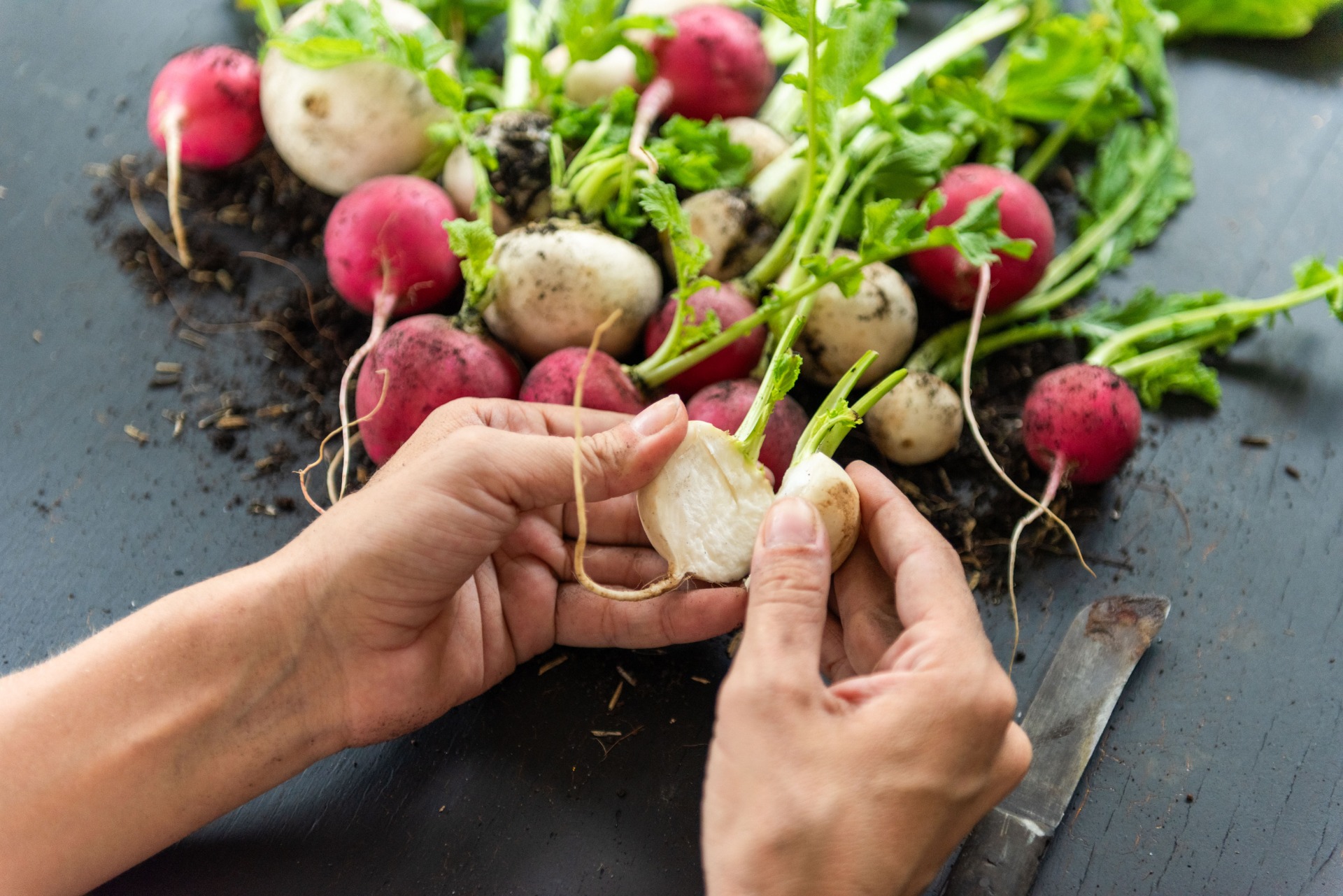
I used to pull up woody, spicy radishes that tasted like disappointment. Learning how to grow radishes the right way fixed that for good. Now I get mild, crunchy roots every time in under a month, and I want the same for you.
Radishes taught me patience the hard way. My first few seasons produced leaves the size of dinner plates and roots the size of peas. I almost gave up. Honestly? The third failed batch nearly ended my radish days. Then I stopped overcomplicating things and focused on three basics: cool soil, steady moisture, and ruthless thinning. Everything changed.
This is the method I use now. It works in raised beds, containers, and regular garden rows. No fancy gear required.
Why Most People Get Woody or Spicy Radishes
I used to blame the seeds. Wrong move.
The real culprits are heat, drought stress, and overcrowding. Radishes grow so fast that any slowdown turns the root fibrous and hot. See, the plant puts its energy into survival instead of swelling a nice bulb.
Hot days above 75°F push them to bolt. Inconsistent water does the same. Leaving them in the ground past peak size finishes the job. I learned this after leaving a row two weeks too long. The roots looked perfect from above. Under the soil they were woody and bitter.
Cool weather and speed are everything. Plant when nights sit in the 40s and days stay under 70°F. Keep the soil evenly moist. Pull them the moment they hit the right size. That simple shift gave me the sweetest radishes I have ever grown.
Choosing the Right Radish Varieties for Your Setup
I keep two main groups in rotation.
Spring Salad Types
These mature in 21 to 30 days. Cherry Belle gives classic round red roots. French Breakfast stretches longer with a white tip and milder bite. Easter Egg Mix brings purple, pink, and white for fun. I plant these for quick wins and continuous harvests.
Winter and Daikon Types
These take 50 to 70 days and handle cooler fall weather better. White Icicle stays crisp longer. Daikon grows long and mild. I use them for storage and cooking. One year I grew a daikon that stretched past a foot. It sliced up beautifully for stir-fries.
Start with Cherry Belle or French Breakfast if you are new. They forgive small mistakes and deliver fast results. Once you nail those, add a daikon row for variety.
Soil Prep That Actually Lets Roots Expand
Compacted soil is the silent killer of good radishes. Roots need room to swell without hitting rocks or hard clay.
I dig or loosen at least six inches deep for salad types. For daikon I go a full foot. Then I mix in a couple inches of finished compost. No fresh manure. No high-nitrogen fertilizer. Both push leafy tops at the expense of roots.
pH between 6.0 and 7.0 works fine. I never test every year anymore. If my other root crops grow well, the radishes will too. Remove stones and clumps. Straight roots come from clean, loose soil.
Containers work great. I use pots at least 8 to 10 inches deep filled with regular potting mix plus a bit of compost. Raised beds are even better because drainage stays consistent.
When and How I Plant Radish Seeds
Timing beats every other factor.
Best Planting Windows
I sow spring crops as soon as the soil can be worked, usually 4 to 6 weeks before the last frost. Then I plant a short row every 7 to 10 days until the weather warms. For fall I start 4 to 6 weeks before the first frost. In hot summers I stop completely. Midsummer sowings almost always bolt or turn fiery.
Soil temperature between 50°F and 70°F is ideal. Seeds germinate in 3 to 7 days under those conditions.
My Exact Sowing Steps
- Rake the bed smooth after adding compost.
- Make a shallow trench about half an inch deep.
- Drop seeds one inch apart.
- Cover lightly and firm the soil with my hand.
- Water gently so the seeds settle without washing away.
Rows sit 8 to 12 inches apart. In wide beds I broadcast lightly and thin later. I never start radishes indoors. They hate transplanting and grow too fast to need the extra step.
Thinning: The Step Almost Everyone Skips
This is where I used to fail hardest.
Crowded seedlings fight for space and produce skinny roots with huge tops. Once the true leaves appear and plants reach about two inches tall, I thin hard. Salad types go to 2 inches apart. Larger winter types get 4 to 6 inches.
I snip the extras at soil level instead of pulling. That way I avoid disturbing the keepers. The thinnings taste great in salads, like microgreens. FYI, those baby greens are one of the best perks of growing radishes.
Do not skip this. Crowded radishes never bulk up properly.
Watering and Everyday Care That Keeps Roots Mild
Consistent moisture is non-negotiable.
I aim for about one inch of water per week, delivered evenly. Dry spells create woody texture and sharp heat. Sudden heavy water after drought can split the roots. A light mulch of straw or shredded leaves helps hold moisture once seedlings are established.
I check the soil with my finger every couple of days. If the top inch feels dry, I water. In containers this happens faster, so I stay extra vigilant.
Weeds compete for the same space and water. I pull them early while the radishes are still small. After that the canopy usually shades out new weeds.
Fertilizer stays minimal. The compost I added at planting is enough. Extra nitrogen just makes more leaves.
Common Problems and How I Handle Them
Flea beetles love young radish leaves. Tiny holes appear almost overnight. I cover new plantings with lightweight row cover until the plants toughen up. It works better than any spray I have tried.
Root maggots show up in some years. Crop rotation helps. I never plant radishes in the same spot two seasons in a row.
Bolting happens when days lengthen and temperatures rise. The plant sends up a flower stalk and the root turns tough. There is no fixing it. I just pull those plants and start a new row in a cooler spot if possible.
Split roots come from uneven water. Steady moisture prevents most of them.
Harvest Timing That Guarantees Good Flavor
Speed matters here too.
Salad radishes are ready 21 to 30 days after sowing. I start checking when the shoulders push up through the soil and look about the size of a large marble to a golf ball. I gently brush soil away to check diameter. One inch is usually perfect.
I grasp the leaves at the base and twist while pulling. Most come up clean. For stubborn ones I loosen the soil first with a trowel.
Winter types take longer. I wait until they reach the size listed on the packet, then dig carefully with a fork to avoid breaking the long roots.
Harvest in the morning when the plants are hydrated. Taste improves if I get them into the kitchen quickly. I twist off the greens right away. Leaving them attached draws moisture from the root and shortens storage life. The greens themselves go into soups or sautéed dishes the same day.
Succession Planting for a Steady Supply
One big planting gives a glut then nothing. I plant short rows every week or ten days while the weather stays cool. That way I always have a few ready to pull.
In spring I stop when daytime highs climb past 75°F. In fall I keep going until hard freezes threaten. This rhythm keeps the kitchen stocked without overwhelm.
Growing Radishes in Containers and Small Spaces
I grow plenty in pots on the patio. A 10-inch deep container holds a surprising number. I use the same soil mix and spacing. Water more often because pots dry out faster. Afternoon shade in warm weather helps prevent bolting.
Radishes also fill gaps between slower crops like broccoli or tomatoes. By the time the big plants need the space, the radishes are already harvested. They even help loosen the soil a bit for the next crop.
What I Do With the Harvest
Fresh radishes go straight into salads, on buttered bread, or pickled. The mild ones I grow now need almost no dressing. I also roast larger daikon with other root vegetables. The greens get washed and cooked like spinach.
Storage is simple. Trimmed roots keep in a plastic bag in the fridge for a week or two. Winter types store even longer in a cool root cellar if I leave a bit of stem attached and skip washing until use.
Frequently Asked Questions
How long does it take to grow radishes from seed to harvest?
Salad types usually finish in 21 to 30 days. Winter and daikon types need 50 to 70 days. Cool weather and steady moisture keep them on schedule.
Why do my radishes taste so spicy or woody?
They grew too slowly. Heat, dry soil, or overcrowding causes it. Plant in cool weather, water evenly, thin properly, and harvest on time. That combination fixed the problem for me.
Can I grow radishes in summer?
I avoid it. Hot weather makes them bolt and turn hot. Stick to spring and fall plantings unless you have a very cool microclimate or heavy shade.
Do radishes need full sun?
Six hours is ideal. In warmer climates a bit of afternoon shade helps. Too much shade produces more leaves than roots.
How do I know when to harvest radishes?
Check the diameter. Most salad types taste best around one inch across. Push the soil aside gently and look. Pull them as soon as they hit that size.
I still get a thrill every time I pull a perfect red globe from the soil. The process is simple once you stop fighting the plant’s natural speed. Cool soil. Steady water. Aggressive thinning. Early harvest.
Start a short row this week if the weather is right. In less than a month you will be eating radishes that actually taste the way they should. And when that first crisp bite hits, you will understand why I keep coming back to this little crop every season.