

I started growing garlic from a clove after one too many trips to the store for mediocre bulbs that tasted flat. The first time I tried it, I planted a handful of leftover cloves from a farmer’s market head and ended up with more garlic than my kitchen could handle. That single experiment taught me everything I needed. Now I plant every fall and never buy garlic again.
Learning how to grow garlic from a clove turned into one of the easiest wins in my garden. You break apart a bulb, tuck the individual cloves into the ground, and wait. The process rewards patience more than skill. I still get a little thrill every spring when the green shoots push through the mulch.
Choosing the Right Garlic Cloves
Not every clove deserves a spot in the ground. I learned this the hard way during my second season. I planted a mix of large outer cloves and tiny inner ones. The big ones produced fat bulbs. The small ones gave me sad little rounds that barely counted as garlic.
Always pick the largest, firmest cloves. They carry more energy and grow into bigger bulbs. Leave the papery skin on. Peeling it invites rot.
I avoid supermarket garlic now. Most of it gets treated to stop sprouting, and some carries diseases I don’t want in my soil. Seed garlic from a local nursery or online supplier works better. Organic heads from a trusted farm stand also do the job if they look healthy and plump.
Hardneck varieties suit colder winters. Softneck types handle milder climates and store longer. I grow both. Hardnecks give me those delicious scapes in early summer. Softnecks braid beautifully for hanging in the kitchen. Choose what matches your weather and your cooking style.
Getting the Soil Ready
Garlic hates wet feet. Compacted clay nearly killed my first attempt. The cloves sat in waterlogged dirt and turned to mush by spring.
I loosen the bed to at least eight inches deep. Then I mix in a few inches of finished compost. The goal is light, well-draining soil that still holds some moisture. A pH between 6.0 and 7.0 keeps things happy. I test mine every couple of years with a cheap kit.
Full sun matters. Six to eight hours daily produces the strongest plants. Partial shade works in a pinch, but the bulbs stay smaller. Raised beds make drainage easier if your native soil stays soggy after rain.
I work a light handful of balanced organic fertilizer or bone meal into the planting zone. Nothing heavy. Too much nitrogen early on pushes leafy growth at the expense of bulbs later.
When and How to Plant Garlic Cloves for the Best Results
Timing makes or breaks the crop. Garlic needs a stretch of cold weather to form proper bulbs. Planting too early risks premature shoots that freeze. Planting too late leaves the roots weak.
I plant four to six weeks before the ground freezes solid. In my area that lands in mid-to-late October. Warmer zones push into November or even December. If winters stay mild where you live, you can chill the cloves in the fridge for a few weeks first.
Break the bulb into individual cloves only on planting day. Separating them early dries them out and reduces vigor.
Here’s the exact method I follow every year:
- Dig holes or a shallow trench about two inches deep.
- Space cloves four to six inches apart in the row.
- Leave twelve inches between rows so the plants get air and light.
- Set each clove pointy end up, flat root end down.
- Cover with soil and press gently.
- Water once to settle everything.
- Mulch with three to six inches of straw or shredded leaves.
That orientation matters. Upside-down cloves still grow, but they waste energy and produce weird shapes. I mark the rows with stakes so I remember where everything sits under the mulch.
Container growing works if space is tight. Use a pot at least ten inches deep with good drainage holes. Same depth and spacing rules apply. I keep pots in a sunny spot and move them under cover during the worst freezes.
Caring for Your Growing Garlic Through the Seasons
Once the cloves go in, the real work is mostly waiting. Fall roots establish under the mulch while the tops stay quiet. In spring the green shoots appear like magic.
I pull most of the mulch aside once hard freezes pass, then leave a thin layer to suppress weeds. Garlic competes poorly with grass and chickweed. Hand weeding keeps the bed clean without disturbing the shallow roots.
Water carefully. After the initial soak at planting, I usually leave the bed alone until spring growth starts. During the main growing period I aim for about an inch of water a week if rain stays scarce. Consistency beats flooding. Soggy soil invites rot. Dry spells during bulb formation produce small heads.
Fertilizer gets one more application in early spring when the shoots reach six inches. A light nitrogen boost helps. After that I stop. Late nitrogen can delay bulb maturity and cut storage life.
Hardneck varieties send up curly flower stalks called scapes. I snip them off as soon as they appear. Leaving them on steals energy from the bulbs. The scapes taste great in pesto or stir-fries, so nothing goes to waste.
Pests stay mostly quiet. Garlic actually repels many insects. I watch for onion maggots or thrips in wet years and use row cover if needed. Good air flow and clean beds prevent most problems.
Harvesting and Curing So Your Garlic Lasts
Harvest timing feels like the biggest guessing game at first. Pull too early and the bulbs stay undersized. Wait too long and the cloves start to separate in the ground.
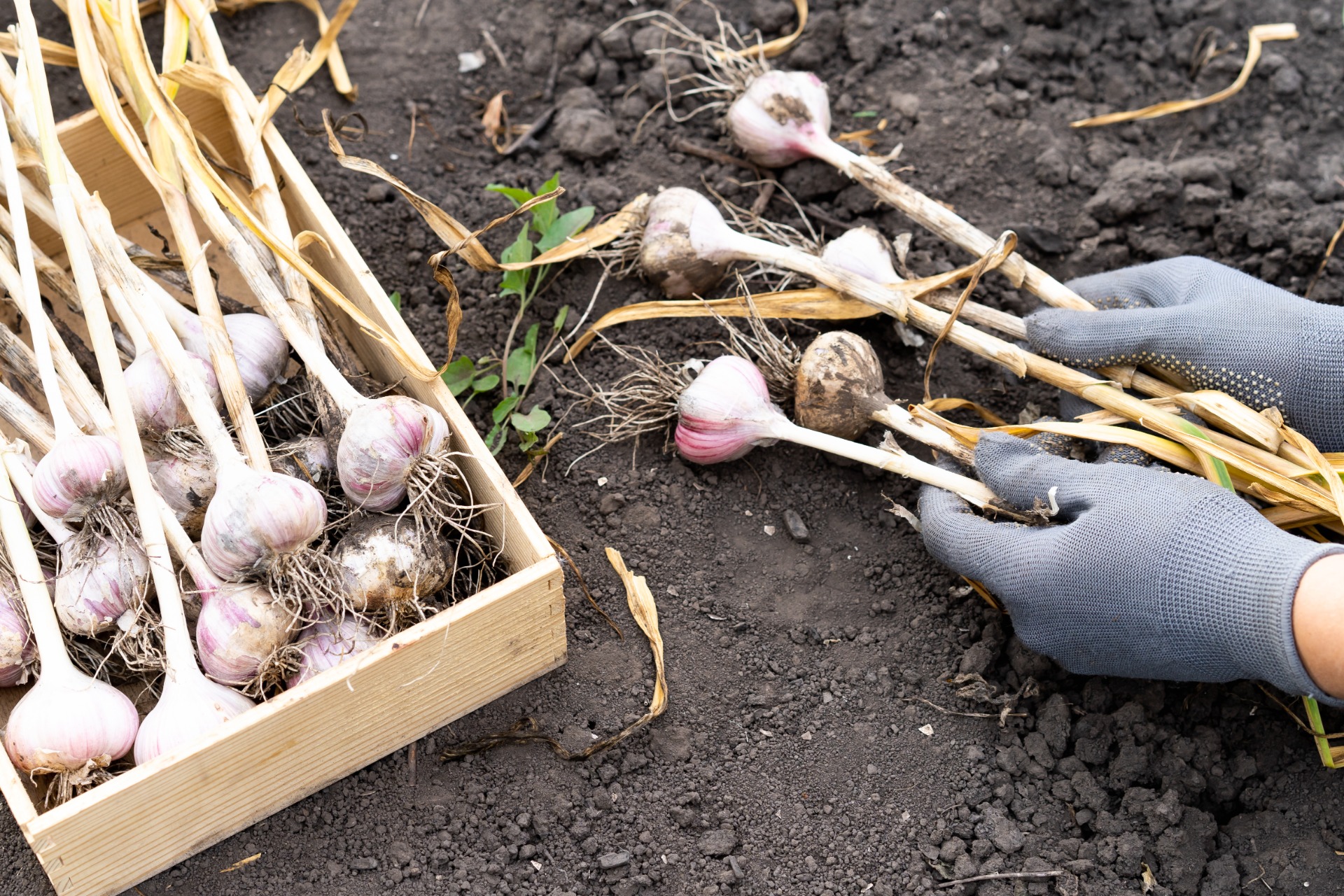
I dig when the lower leaves turn brown while five or six upper leaves remain green. That usually falls in July for me. A test dig of one plant tells the truth. The bulbs should look plump with papery skins starting to form.
Use a garden fork. Sliding it under the plants lifts them cleanly without breaking the necks. I brush off loose dirt but never wash them. Water invites mold during curing.
Curing takes two to three weeks in a dry, shady, well-ventilated spot. I hang bunches or lay them on screens. Once the outer skins feel dry and papery and the necks harden, I trim the roots and tops. Softnecks can be braided while the stems still have a little flexibility.
Storage is simple. Cool, dark, and dry keeps bulbs good for months. I keep mine in mesh bags in a spare closet. Never the fridge. Humidity ruins them.
Common Mistakes I Made and How You Can Skip Them
My first year taught me more through failure than success. I planted grocery store cloves that barely sprouted. I crowded them too close and harvested a bunch of small, competing bulbs. I left the scapes on the hardnecks and watched the heads stay undersized.
Here’s the short list of what trips most people up:
- Using treated supermarket garlic that refuses to grow well.
- Skipping soil prep and planting into heavy or nutrient-poor dirt.
- Planting too shallow or too deep for the climate.
- Crowding cloves so they fight for space and food.
- Ignoring the cold requirement and planting in spring without chilling.
- Overwatering or letting the bed stay soggy.
- Harvesting by calendar instead of leaf color.
Honestly? Most of these mistakes cost me one season of disappointment. After that I tightened up the process and the harvests got consistently good.
IMO the biggest upgrade came from switching to proper seed garlic and giving the plants real space. Everything else followed.
Frequently Asked Questions
Can I really grow garlic from a clove I already have in the kitchen?
Yes, as long as the clove is firm, healthy, and preferably organic or untreated. Store-bought ones sometimes fail because of sprout inhibitors, so seed garlic remains the safer bet.
How long does it take to grow garlic from a clove?
From fall planting to summer harvest usually runs eight to nine months. Spring plantings mature faster but often produce smaller bulbs.
Do I need to water garlic all winter?
No. Once the ground freezes, nature handles moisture. Only water in fall if the soil stays bone dry for weeks after planting.
What if my climate never gets cold enough?
Chill the cloves in a paper bag in the refrigerator for six to ten weeks before planting. That mimics the cold period the plants need to form bulbs.
Can I grow garlic in pots on a balcony?
Absolutely. Choose deep containers with drainage, use quality potting mix amended with compost, and follow the same planting depth and spacing. Move pots to a protected spot during extreme cold.
Growing garlic from a clove turned into one of those quiet garden habits that keeps giving. One bulb becomes many. Those many bulbs become next year’s seed and a year’s worth of cooking. The process stays simple once you lock in the timing and the basics.
I still plant every October with the same mix of hope and muscle memory. The shoots appear in spring, the scapes arrive in early summer, and by July I’m pulling fat bulbs from the ground. You can do the same. Grab a few good cloves this fall, give them a proper home, and watch what happens.